Made with the help of AI from public curriculum standards, then checked. Mistakes can slip through, so please look it over before use. Found one? Tell us and we will fix it.
What's on the worksheet
Trace each uppercase and lowercase letter. Start at the green dot.
Write the alphabet on your own.
Skills practiced
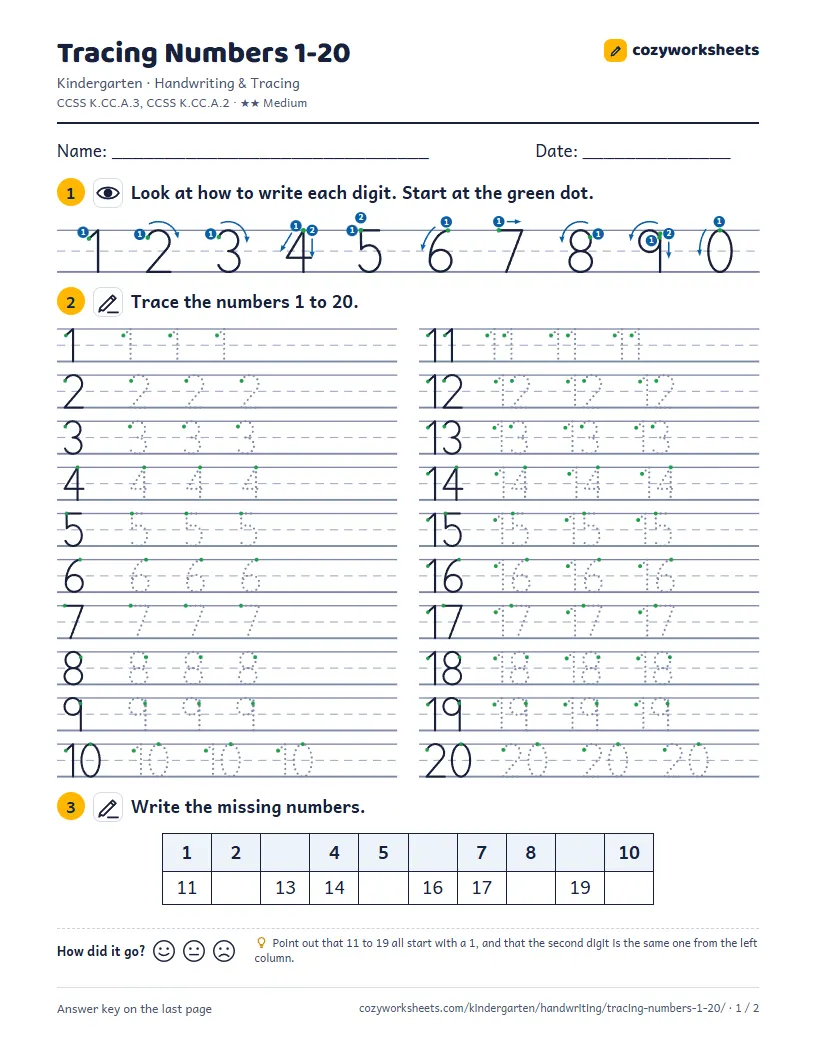
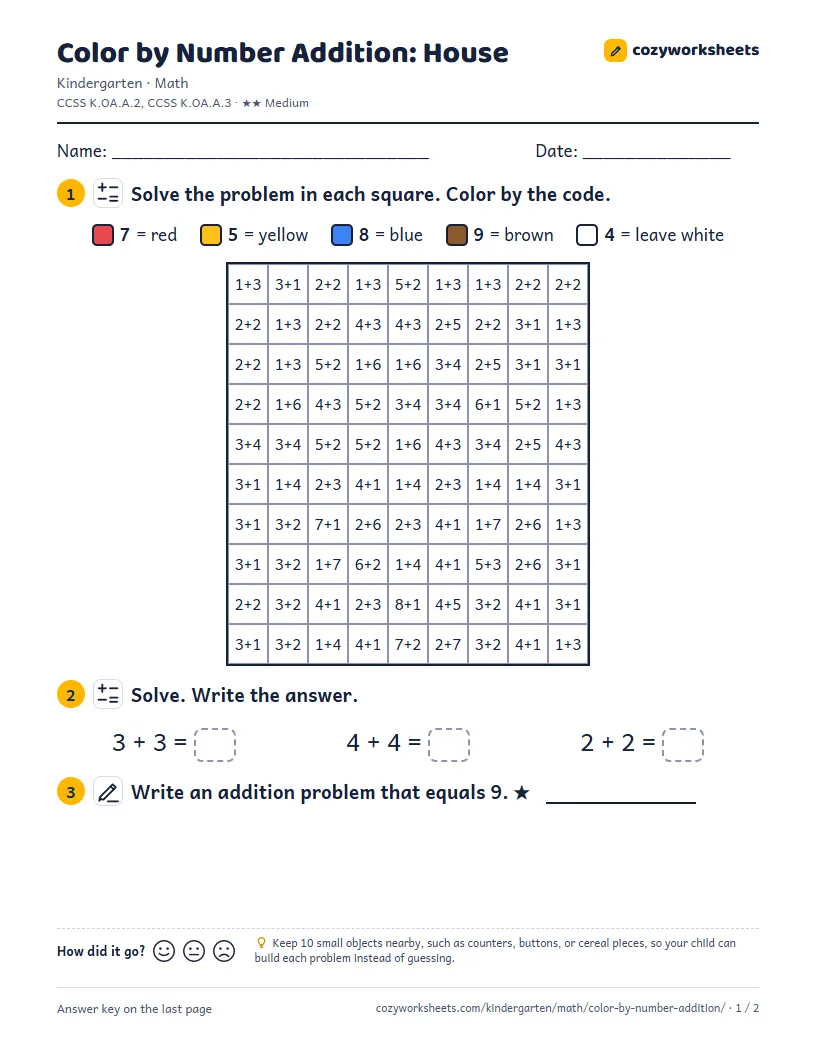
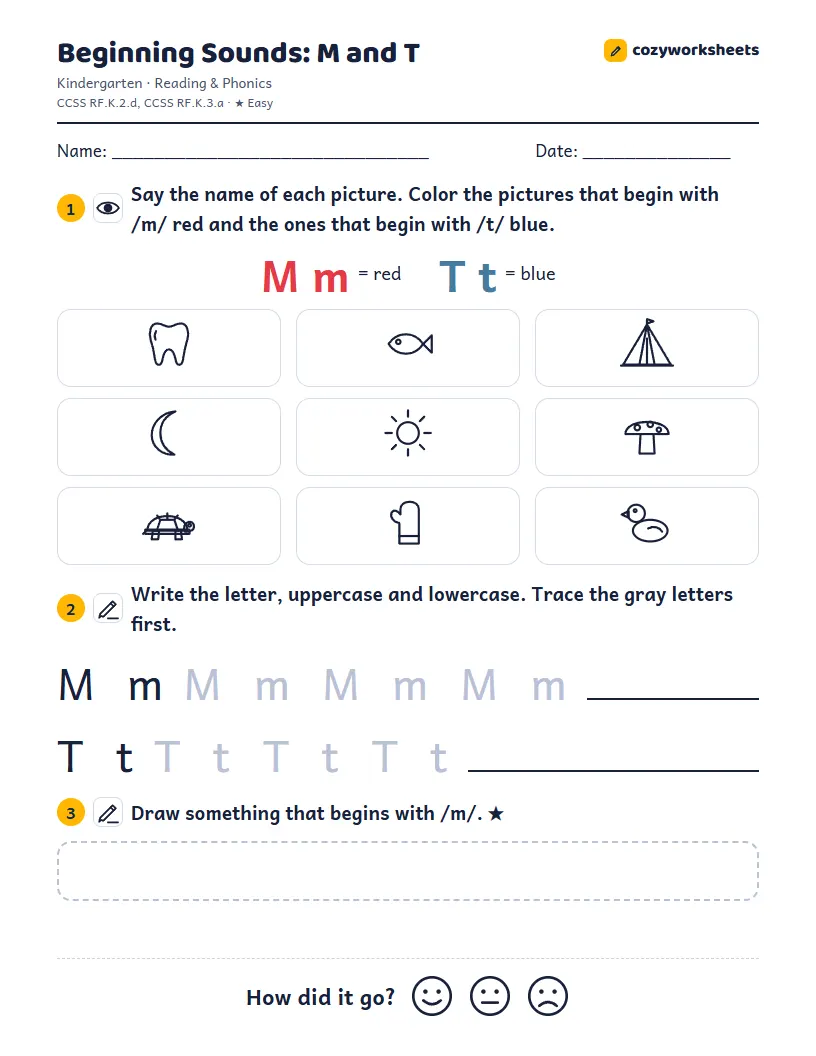
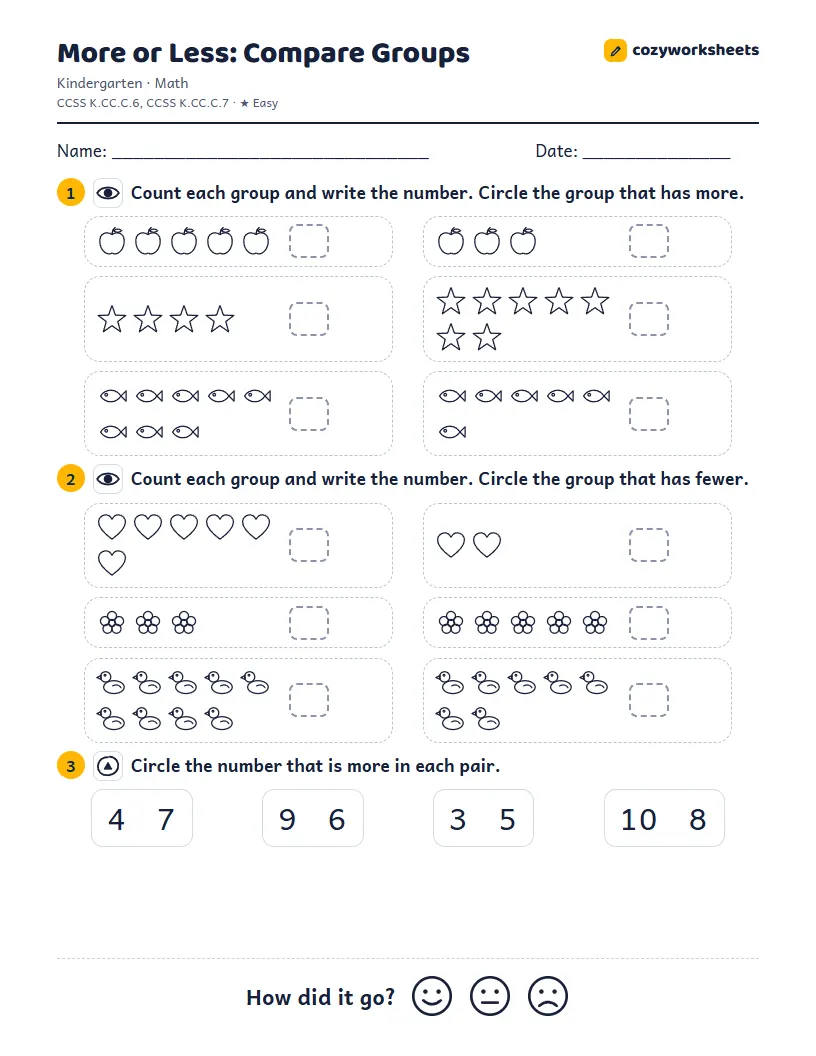
This page puts the whole alphabet on one sheet, with each uppercase letter right next to its lowercase partner: Aa, Bb, Cc, and so on to Zz. Your child traces every pair from the green starting dot, then writes the alphabet alone on three blank primary lines. Seeing the pairs side by side builds letter recognition, and kindergarten writing goals expect children to print most capital and small letters by the end of the year.
Your child reads the instruction out loud and explains in their own words what to do.
Work through the tasks in order: the first ones are easier and warm up for the next.
The task with a star is optional, for early finishers.
Check together with the answer key and redo only what was wrong.
Tips for parents and teachers
Have your child say each letter name while tracing, so the shape, the name, and the order stick together. Watch the lowercase letters that hang below the line, g, j, p, q, and y, because kids often sit them on the bottom line like the others. A quick check after each row helps: does every letter touch the bottom line?
Make it easier or harder
Easier: Trace one row a day for four days. On the blank lines, let your child write only the letters in their own name instead of the full alphabet.
Harder: Ask your child to write the alphabet from memory on the blank lines without looking at the traced rows. Then try a second time and look for neater letters, not faster ones.
Answer key
Show the answer key
Answer Key: Alphabet Writing Practice
Kindergarten · Handwriting & Tracing
CCSS L.K.1.a, CCSS RF.K.1.d · ★★ Medium
cozyworksheets
1Trace each uppercase and lowercase letter. Start at the green dot.
2Write the alphabet on your own.
Answers will vary. Check that each letter sits on the bottom line, tall letters touch the top line, and g, j, p, q, y hang below it.
More Kindergarten worksheets Scan the code or visit cozyworksheets.com/kindergarten/. Free, with answer keys.
It is made for Kindergarten (ages 5-6). The level is ★★ medium, so it suits children who already know the basics.
How long does it take?
About 20 minutes. Young children can do it in two short sittings with a break in between.
Where is the answer key?
On the second page of the PDF and on this page under Show the answer key. To print for a whole class, print only the first page of the PDF.
Which standard does it practice?
Common Core L.K.1.a (writing many capital and small letters by hand); Common Core RF.K.1.d (recognizing and naming every capital and small letter).
Can I use it in my classroom?
Yes. Print as many copies as you need for your own children or students. Please do not resell it or upload it to other websites.
Need a fresh version?The worksheet maker builds new pages with different numbers, mazes and tracing rows, plus versions A, B and C for a class.Open the worksheet maker